

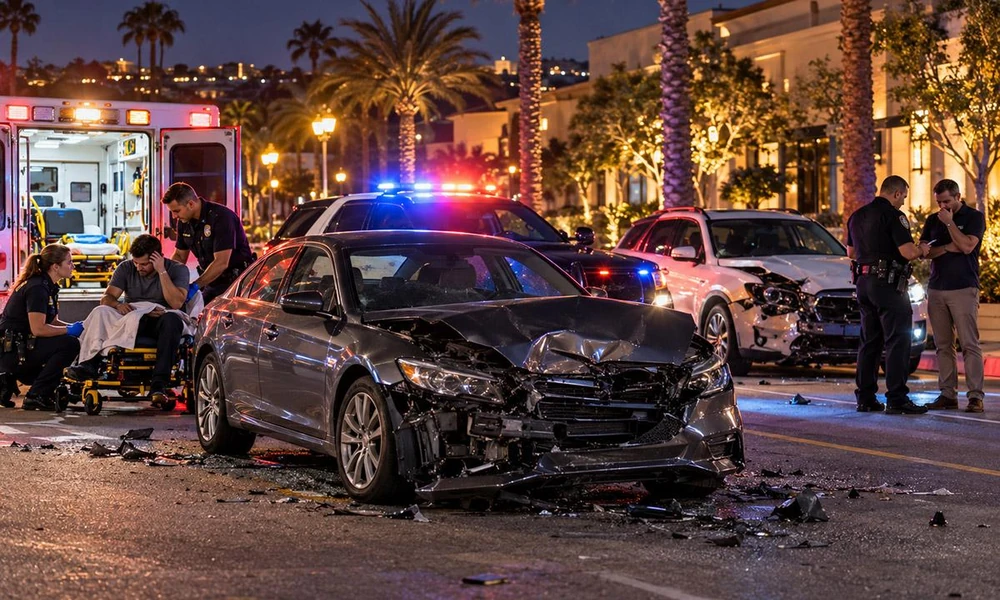
If a drunk driver hit you in Orange County, you can usually seek compensation from the driver’s auto insurance and, if needed, your own uninsured or underinsured motorist coverage. California also allows punitive damages against drunk drivers. Bars and hosts are generally not liable, except in cases involving minors. The California Victim Compensation Board may help with some costs. Most claims must be filed within two years.
You are lying in a hospital bed at Hoag or UCI Medical Center. Your body aches, your car is gone, and the officer who came by told you the other driver blew well over the legal limit. You feel furious, scared, and overwhelmed. Talking to a drunk driver accident lawyer in Orange County may be the last thing on your mind, but the decisions you make in the next few weeks matter.
First, remember this: the accident was not your fault, and California law supports you. Drunk driving crashes are among the clearest cases of carelessness there are. But clear fault does not always mean a fair payout. Insurance limits, delays, and confusing rules can still stand in your way.
This guide explains what to do now, who may pay, and how to protect your right to full compensation.
What to Do After Being Hit by a Drunk Driver
Quick take: Get medical care, make sure police document the DUI, and gather evidence while it is fresh. Do not talk to the drunk driver’s insurance company about fault or your injuries until you understand your rights.
Your health is the top priority. Some injuries, like brain injuries and internal bleeding, do not show up right away. Once you are safe, focus on building a record:
- Get medical treatment and follow up with every recommended appointment
- Get the police report number and ask whether the driver was arrested for DUI
- Write down witness names and numbers, including anyone who saw the driver before the crash
- Note where the driver was coming from, if you know, such as a bar, restaurant, or party
- Photograph your injuries, vehicles, and the scene
- Do not give a recorded statement to the drunk driver’s insurer
Who Pays After a Drunk Driving Accident in Orange County?
Quick take: The drunk driver’s auto insurance is usually the first source of compensation. If their coverage is too low or they had none, your own uninsured or underinsured motorist coverage may help. Sometimes, the vehicle’s owner or the driver’s employer may also be liable.
Drunk drivers often carry minimum insurance, or none at all. That is why it is important to look at every possible source:
- The drunk driver’s liability insurance, which covers your medical bills, lost wages, and pain and suffering up to the policy limits
- Your uninsured motorist (UM) coverage, if the driver had no insurance or fled the scene
- Your underinsured motorist (UIM) coverage, if the driver’s limits are not enough to cover your losses
- The vehicle’s owner, in some situations, if they let the driver use the car
- The driver’s employer, if the driver was working at the time of the crash
- The driver personally, if they have assets beyond their insurance
A drunk driver’s low insurance limit is not the ceiling on your recovery.
Can You Get Punitive Damages From a Drunk Driver?
Quick take: Yes, California law can allow punitive damages against drunk drivers. Punitive damages punish especially reckless conduct, beyond paying for your losses. California courts have recognized that choosing to drive while intoxicated can support this kind of award.
Most injury damages are “compensatory,” meaning they pay you back for what you lost. “Punitive damages” are different. They are meant to punish and discourage outrageous conduct.
Under California Civil Code section 3294, punitive damages may be awarded when there is clear and convincing evidence of “malice,” which can include conscious disregard for the safety of others. The California Supreme Court held in Taylor v. Superior Court (1979) that a drunk driver’s decision to drive can meet that standard.
A few things to know:
- Punitive damages are not automatic. They depend on the facts, such as how intoxicated the driver was or whether they had prior DUIs
- Insurance usually does not pay them. California public policy generally bars insurers from covering punitive damages, so they come from the driver personally
- They can still matter, especially when the driver has assets
Can You Sue the Bar or Party Host?
Quick take: In most cases, no. California law generally protects bars, restaurants, and party hosts from liability for serving alcohol to adults. The big exception involves minors: a host or business that serves alcohol to someone under 21 may be liable in certain situations.
California’s “dram shop” rule is narrower than in many states. Under Civil Code section 1714, the law treats drinking alcohol, not serving it, as the cause of an intoxicated person’s crash. That generally shields bars and hosts when the drinker is an adult.
The exceptions focus on young people:
- Social hosts who knowingly give alcohol to someone under 21 at their home can be liable if that minor causes injury
- Licensed businesses can be liable under Business and Professions Code section 25602.1 for selling alcohol to an obviously intoxicated minor who then causes harm
As Nolo explains, these claims let injured people pursue the server in addition to the drunk driver. If the driver who hit you was under 21 and coming from a bar near Huntington Beach’s Main Street or a house party in Costa Mesa, that detail could matter.
The Criminal DUI Case and Your Injury Claim
Quick take: The criminal DUI case and your injury claim are separate. The district attorney decides whether to prosecute, while your civil claim seeks money for your losses. A conviction or guilty plea can help your claim, but you do not need to wait for the criminal case to start protecting your rights.
Here is how the two cases relate:
- Different goals. The criminal case punishes the driver. Your civil case compensates you
- Different burdens of proof. Criminal cases require proof beyond a reasonable doubt. Civil cases use a lower standard
- Evidence overlap. Blood alcohol results, police reports, and witness statements can help both cases
- Restitution. A criminal court may order the driver to repay some of your losses
- Tougher 2026 rules. According to the California DMV, AB 1087 increased probation for intoxicated vehicular manslaughter to three to five years, and AB 366 extended the ignition interlock program for DUI offenders
A victim advocate from the Orange County District Attorney’s office may contact you. They can explain the criminal process and your rights as a crime victim.
The criminal case punishes the driver. Your injury claim is about making you whole.
Help Beyond the Lawsuit: California Victim Compensation
Quick take: Because drunk driving is a crime, injured victims and families may qualify for help from the California Victim Compensation Board (CalVCB). It can help cover certain costs like medical bills, lost income, counseling, and funeral expenses when other sources do not.
The California Victim Compensation Board is a state program that helps people harmed by violent crime, including DUI crashes. It is not a substitute for an injury claim, but it can provide help while that claim is pending.
What to know:
- It is a payer of last resort, meaning it helps with costs not covered by insurance or other sources
- There are eligibility rules and limits, including filing deadlines
- Families can apply after a fatal DUI crash for funeral and counseling costs
Deadlines for Drunk Driving Injury and Wrongful Death Claims
Quick take: In most cases, you have two years from the crash to file a personal injury lawsuit in California, and families generally have two years from the date of death to file a wrongful death claim. If a government agency shares blame, you may have only six months.
Deadlines to keep in mind:
- Two years for most personal injury lawsuits under Code of Civil Procedure section 335.1
- Two years for most wrongful death claims, measured from the date of death
- Six months to file a claim against a government agency under Government Code section 911.2, such as for a dangerous road design
- UM and UIM claims have their own policy requirements, so notify your insurer promptly
If you lost a loved one, our wrongful death attorneys can guide your family through the process with compassion.
The Bottom Line
A drunk driver made a choice that hurt you. California law gives you real tools to hold them accountable, from insurance claims to punitive damages. The key is finding every source of compensation and protecting your deadlines while you heal.
Whether you were hit in Huntington Beach, Costa Mesa, Santa Ana, or anywhere in Orange County, our car accident lawyers are ready to stand with you.
Been in an accident or hurt on the job? You don’t have to navigate insurance companies alone. Oracle Law Firm fights to get you the compensation, control, and clarity you deserve.
Get a Free Consultation or call 888.597.4099.
Disclaimer: This article is for general information only and is not legal advice. Reading it does not create an attorney-client relationship. Every case depends on its own facts, and past results do not guarantee future outcomes. For advice about your situation, speak with a licensed California attorney.
Frequently Asked Questions
What compensation can I get after being hit by a drunk driver?
You may be able to recover medical bills, lost wages, property damage, and pain and suffering from the driver’s insurance and, if needed, your own uninsured or underinsured motorist coverage. In some cases, California also allows punitive damages against drunk drivers to punish especially reckless conduct.
Can I get punitive damages from a drunk driver in California?
Yes, in some cases. Under Civil Code section 3294, punitive damages may be awarded when there is clear and convincing evidence of conscious disregard for others’ safety, and California courts have recognized that driving while intoxicated can meet that standard. Insurance usually does not cover punitive damages.
Can I sue a bar that served the drunk driver?
Usually not, because California law generally treats drinking, not serving, as the cause of a drunk driver’s crash. The main exceptions involve minors: businesses that sell alcohol to an obviously intoxicated person under 21 and social hosts who knowingly give liquor to someone under 21 can be held liable.
Do I have to wait for the DUI criminal case to finish before filing a claim?
No. The criminal case and your civil injury claim are separate. You can start your claim right away, and evidence from the criminal case, like blood alcohol results or a guilty plea, can help support your claim as it develops.
How long do I have to file a claim after a drunk driving accident in California?
Most personal injury lawsuits must be filed within two years of the crash, and most wrongful death claims within two years of the date of death. If a government agency shares responsibility, a claim may need to be filed within six months.
